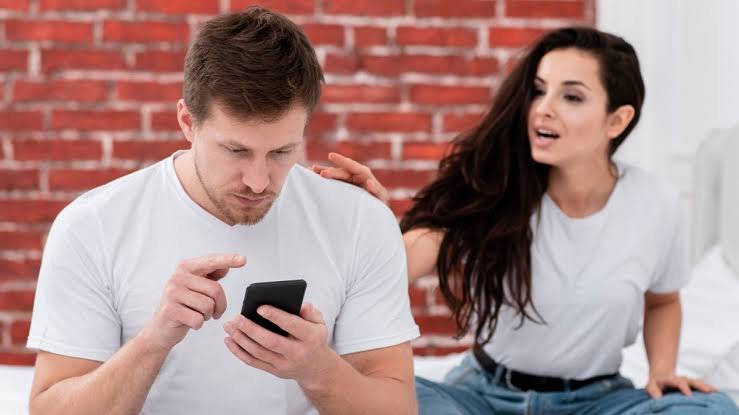
You downloaded the app. You picked your best photos. You wrote a bio that was just the right mix of funny and genuine. You swiped. You waited.
Maybe a few matches trickled in. Maybe even a date or two. You thought, okay, this is working.
Two years later — same apps, same routine, same empty feeling at 11pm on a Friday — and you’re starting to wonder if something is fundamentally broken. Either with the apps. Or worse, with you.
This article is for you.
Not the version of you that posts “still looking lol” with a laugh emoji. The real version. The one that’s genuinely tired. The one that wants actual answers — not another listicle about “perfecting your profile.”
Let’s talk about what nobody in the dating content space will say out loud.
The App Was Never Designed to Find You Love
This is the uncomfortable foundation everything else sits on.
When you open Tinder, Bumble, or Hinge, you are not a customer. You are the product. The actual customers are advertisers who pay for your attention. The longer you stay on the app, the more valuable you are to them.
So think about this logically — if you found your perfect match on day one and deleted the app, the company loses a user. That’s bad for business. So the entire system is engineered to keep you almost satisfied. Never fully. Just enough to stay.
This is called variable reward psychology. It’s the same mechanism behind slot machines in Las Vegas. Occasional wins, frequent near-misses, and just enough hope to keep pulling the lever.
You open the app every morning thinking you’re looking for love. You’re actually sitting down at an emotional slot machine — voluntarily, every single day.
Understanding this doesn’t mean you should delete every dating app immediately. It means you need to understand the rules of the game before you keep playing it — because right now, the house is winning.
What Two Years of Online Dating Actually Does to a Person
There’s a predictable psychological arc that almost everyone experiences. Nobody maps it out for you beforehand, so you think your experience is unique. It isn’t.
Months 1 through 6: The Optimism Phase
Everything feels possible. You get matches, you have conversations, maybe a few dates. The whole thing feels exciting — like a new city you just moved to. You tell your friends you’re “putting yourself out there.” They nod approvingly.
Months 6 through 12: The Normalization of Bad Behavior
This is where the damage quietly begins.
Conversations start and then dissolve without explanation. You go on a date, both of you laugh and talk for three hours, and then one of you — or both — just never follows up. You get ghosted once, it stings. Twice, you shrug. By the tenth time, you’ve stopped expecting anything different.
You have just normalized being disposable.
That’s not a small thing. That’s a fundamental rewiring of how you expect to be treated by another human being.
Months 12 through 18: The Mechanical Phase
You’re still swiping but the excitement is completely gone. It feels like a second job — a job you hate but won’t quit because “what if tomorrow is the day something changes.”
You send the same openers. You have the same surface conversations. You go through the motions. The app is open on your phone but your heart checked out months ago.
Months 18 through 24: The Dangerous Conclusion
This is where most people land, and it’s the part nobody talks about because it’s too painful to admit publicly.
After nearly two years of trying and failing, your brain starts reaching for the most available explanation: “The problem is me.”
And from there, it spirals.
The Most Damaging Lie Online Dating Tells You
“You’re not getting results because there’s something wrong with you.”
The apps don’t say this explicitly. They don’t have to. The experience delivers that message repeatedly, quietly, over months — until you believe it without even realizing you were taught it.
Let’s look at what the actual numbers say.
The average male user on Tinder matches with roughly 1 in every 100 profiles he swipes right on. The match-to-conversation conversion rate hovers around 5 percent. The conversation-to-date pipeline is somewhere between 1 and 2 percent.
Read that again. If you’re a man on these apps, you are working with a roughly 1 in 1,000 success rate on any given swipe leading to an actual date.
If you were running a business with those conversion numbers, you would not blame your personality. You would examine the system.
Now here’s the piece that gets missed entirely in every “how to improve your dating profile” article on the internet:
Online dating strips out everything that actually makes you attractive.
Your energy when you walk into a room. The way your face changes when you’re talking about something you genuinely love. The confidence in how you carry yourself. Your sense of humor that only lands because of how you say it, not just what you say. The warmth that people feel in your presence.
None of that fits in a photo. None of it survives the compression of a bio. And none of it gets transmitted through a “hey, how’s your week going” opening message.
So if you are genuinely magnetic in real life — funny, interesting, caring, good company — and you’re failing on apps, that is not a contradiction. That is exactly what you should expect. The medium is filtering you out, not the market.
How Ghosting Quietly Broke Your Ability to Connect
Let’s talk about what two years of being ghosted has done to your nervous system. Because this part has consequences that extend far beyond your dating life.
The first time someone disappeared mid-conversation, it hurt in a specific, sharp way.
The fifth time, less so.
By the twentieth time, you barely noticed. You told yourself this meant you were getting stronger, more resilient. What was actually happening was something else entirely.
You were learning not to invest. You were building emotional armor that feels like confidence but functions like distance. You stopped picturing a future with someone before they’d proven they’d stick around, which sounds reasonable, but it also means you stopped letting anything feel real before it was guaranteed — and nothing in human connection is ever guaranteed.
This is why a lot of people who’ve been on the apps for years describe dates that feel strangely flat. Both people are performing interest without actually feeling it. Both are waiting for the other person to prove they’re worth the risk of genuine feeling.
You cannot build connection through mutual guardedness. It’s like trying to start a fire with wet wood. Everyone wonders why nothing is catching.
The ghosting culture of online dating didn’t just give you bad experiences. It taught you that human beings are temporary by default, that investment is naive, and that protecting yourself matters more than opening up. Those lessons don’t switch off when you sit across from someone you actually like.
The “There’s Always Someone Better” Trap
One of the most psychologically corrosive features of dating apps is something researchers have started calling the paradox of choice in romantic contexts.
When you’re on an app with a theoretically unlimited supply of potential partners, your brain starts behaving in a way it was never designed to. It begins treating people like options in a menu rather than complex human beings.
You go on a date. It goes well. But in the back of your mind, the app is still open. There are other matches. Other conversations. What if the next one is slightly better? What if you’re settling?
This isn’t a character flaw. This is what the platform is engineered to make you feel. More choice sounds like freedom, but in the context of romantic connection, it creates a kind of paralysis and perpetual dissatisfaction.
Real relationships require you to choose someone over uncertainty. They require you to stop audditioning alternatives and actually commit your attention to one person. Dating apps are structurally opposed to this. Every notification is a small whisper: don’t fully commit yet, there’s still more to see.
The result? People who have been on apps for years often struggle to be fully present with anyone. There is always a part of them still swiping — mentally — even when they’re sitting across a dinner table with someone genuinely worth their time.
What Nobody Admits About Dating App “Success Stories”
“My cousin met her husband on Hinge!” someone always says. And yes, that happens.
But here’s the full picture nobody gives you with that anecdote:
According to research on online dating outcomes, couples who meet on apps report lower long-term relationship satisfaction on average than couples who meet through social networks, friends, or in-person settings. The initial filter — physical attractiveness in a static photo — selects for a very narrow version of compatibility.
More importantly, the people who have genuine success stories on these platforms typically share a few things in common that nobody puts in their success narrative: they were usually only on the app for a short period of time (weeks or a few months, not years), they were in a specific life phase where they were genuinely emotionally available, and they often describe the connection clicking unusually fast — almost as if it would have worked in any context, not just the app.
In other words, the apps got credit for a connection that had more to do with timing and mutual readiness than with the platform itself.
Meanwhile, the millions of people grinding it out for two-plus years don’t get written about. Their story doesn’t make a good Instagram caption.
The Real Reason You’re Still Alone (It’s Not What the Apps Tell You)
Let’s get to the honest answer. After two years, there are usually a few real dynamics at play — and none of them are “your photos aren’t good enough.”
You’ve been fishing in the wrong pond.
Dating apps, by design, attract people who are either casually browsing, going through lonely phases, or genuinely looking but stuck in the same cycle you are. The people in your immediate life — friends of friends, colleagues, people at your regular coffee shop — never appear in your algorithm. You may be surrounded by compatible people and using a tool that specifically excludes them.
Your standards have quietly become filters for fear.
After repeated disappointment, many long-term app users develop increasingly specific criteria — not because they’ve discovered what they truly want, but because specific criteria gives you an excuse to reject before you can be rejected. It’s protection wearing the costume of discernment.
You’ve outsourced the vulnerability.
Meeting someone through an app feels lower-stakes in the beginning because the rejection is more abstract. But this also means you’re not practicing the actual skill that intimacy requires: showing up as your full, unguarded self in front of someone, in real time, with nowhere to hide. Two years of app dating can leave you emotionally sophisticated but interpersonally out of shape.
You may not actually be ready — and that’s okay.
This is the one people push back on the hardest. But a lot of people on dating apps are there because they feel like they should be looking — not because they are genuinely in a settled, open place to receive someone. Being on the apps while emotionally unavailable doesn’t produce results; it produces the exact loop you’ve been in.
What Actually Works (And Why You Haven’t Heard This Before)
Nobody in the dating content industry tells you this because it doesn’t sell courses or app subscriptions:
The fastest path out of the two-year loop is to radically change your environment, not your profile.
Join something. A running club, a cooking class, a book group, a volunteer organization, a sports league. Not with the explicit goal of meeting someone — with the goal of being around people who share your actual values and spending enough time with them that real, unperformed connection becomes possible.
This sounds aggressively simple. It is. But simple is not the same as easy, and in a world where everyone reaches for an app as the path of least resistance, choosing to show up somewhere consistently and build genuine community is genuinely countercultural.
The second piece is this: tell people you trust that you’re open to being set up. This feels embarrassing in a way that swiping never does, which is precisely why it works better. It requires a small, real act of vulnerability. And it taps into the most historically successful matchmaking system ever created: people who know and like you, using their judgment to connect you with people they think you’d like.
Third: shorten your time on apps dramatically or stop altogether for a defined period. Not because the apps can never work, but because two years of the same behavior producing the same results is not a strategy. It’s a habit. And habits need pattern interruption.
The Thing Worth Saying Out Loud
If you’ve spent two years trying and you’re still alone, you haven’t failed.
You’ve been playing a rigged game longer than most people do, with more persistence than most people show, and you’ve absorbed a lot of quiet messaging along the way that wasn’t true about you.
You are not too much. You are not not enough. You are not broken because an algorithm didn’t serve you well.
The brutal truth about online dating isn’t just that it’s hard. It’s that it’s specifically designed to feel like it’s about you — your value, your worth, your desirability — when it’s actually about engagement metrics, retention rates, and quarterly revenue.
Once you see that clearly, you can stop audditioning for an app’s approval and start showing up in spaces where people can actually see you.
Not your curated, filtered, optimized, right-swiped self.
You.
That’s the person someone is going to fall for. And they’re probably not going to find you through an algorithm.
Found this article helpful or painfully relatable? Share it with someone who needs to hear it. And drop your experience in the comments — two-year club, you’re not as alone as the apps want you to think.